
Master the Morning (and Evening) Routine
Small, consistent daily-rhythm habits — not grand overhauls — are what actually reduce parenting stress and help children of all ages thrive.
In this article
You're reading this at 11 p.m. because tomorrow morning already feels impossible. You're not alone: a 2023 survey by the American Psychological Association found that parents consistently rank "managing daily responsibilities" among their top three sources of stress — above finances and work pressure. The gap between the family life you want and the one you're actually living usually isn't a parenting-philosophy problem. It's a systems problem.
This guide gives you 15 evidence-informed daily-rhythm hacks drawn from developmental research and real clinical practice. They're organised into six practical themes so you can jump straight to what your family needs right now.
What you'll understand after reading:
1. Master the Morning (and Evening) Routine
The single highest-leverage move you can make is engineering the night before, not the morning itself. Research published in the journal Early Childhood Education Journal consistently shows that predictable daily routines lower cortisol in both children and caregivers — meaning less meltdown, less yelling, less chaos.
Night-Before Prep (Ages 2–17)
- Lay out tomorrow's clothes together before lights-out - Pack lunches, bags, and sports kit the evening before - Do a "launch pad" check: shoes, keys, permission slips all in one spot by the door
Visual Schedules for Little Ones (Ages 2–6)
For pre-readers, a laminated picture chart showing "wake up → potty → dress → breakfast → brush teeth → out the door" removes the need for you to repeat yourself six times. Children this age respond to visual cues better than verbal instructions because their working memory is still developing.
Consistent Bedtimes (All Ages)
The American Academy of Pediatrics (AAP) recommends age-specific sleep targets: 12–16 hours for infants, 11–14 for toddlers, 10–13 for preschoolers, 9–12 for school-age children, and 8–10 for teens. A locked-in bedtime routine — bath, story, lights out — anchors the whole next morning.
2. Build a Meal System That Actually Holds Up
Feeding a family doesn't have to be a daily reinvention — a simple weekly meal system cuts decision fatigue and reduces picky-eating conflict. Dietitians at the Academy of Nutrition and Dietetics note that children eat more variety when meals are predictable and they've had some input in choosing them.
Weekly Meal Planning (Ages 0–17)
Spend 20 minutes on Sunday choosing five dinners. Rotate a shortlist of 10–15 family-approved meals so planning becomes filling in a template, not starting from scratch.
Batch Cooking
Soups, grain bowls, roasted vegetables, and pasta sauces freeze well and can be assembled into three or four different meals. One two-hour Sunday cook session can carry you through Wednesday with minimal effort.
Snack Stations (Ages 3–12)
A low shelf in the fridge and a basket on the counter — both pre-loaded with portioned, grab-ready snacks — let children self-serve between meals. This cuts the "I'm hungry" interruptions dramatically and builds early food autonomy.
3. Age-Appropriate Chores That Build Real Competence
Assigning chores isn't about getting free labour — it's one of the strongest predictors of adult competence and self-sufficiency. A long-running study from the University of Minnesota found that the best predictor of young-adult success was whether they had begun doing chores as young as three or four years old.
Chore Guide by Age
- Ages 2–3: Put toys in a bin, place dirty clothes in a hamper, wipe spills with a cloth - Ages 4–6: Set the table, feed a pet, help sort laundry by colour - Ages 7–10: Load the dishwasher, vacuum a room, take out rubbish, make their own bed - Ages 11–13: Cook a simple meal, do their own laundry, clean a bathroom - Ages 14–17: Manage their own schedule, grocery shop with a list, handle basic home maintenance tasks
Making It Stick
A visual chore chart works for younger children; a shared digital calendar or app works better for teens. Reward completion with points toward a privilege rather than cash — it keeps motivation intrinsic rather than purely transactional.


M.O.M.--Master Organizer of Mayhem: Simple Solutions to Organize Chaos and Bring More Joy into Your Home
- Crafts, Hobbies & Home
- Home Improvement & Design
- How-to & Home Improvements
4. Positive Reinforcement Done Right
Praise is most effective when it's immediate, specific, and tied to effort rather than outcome. This is not a parenting opinion — it's the conclusion of decades of research by psychologist Carol Dweck at Stanford University on growth mindset and behaviour shaping.
The Three Rules of Effective Praise
1. Immediate — within seconds of the behaviour, not at the end of the day 2. Specific — "You put your shoes away as soon as you came in" beats "Good job" 3. Effort-focused — "You kept trying even when it was hard" beats "You're so smart"
Reward Systems That Work (Ages 3–12)
Sticker charts, marble jars, and token boards all work on the same principle: visible, accumulating progress toward a meaningful reward. The key is keeping the reward achievable (within a week for under-7s) and meaningful to the child, not to you.
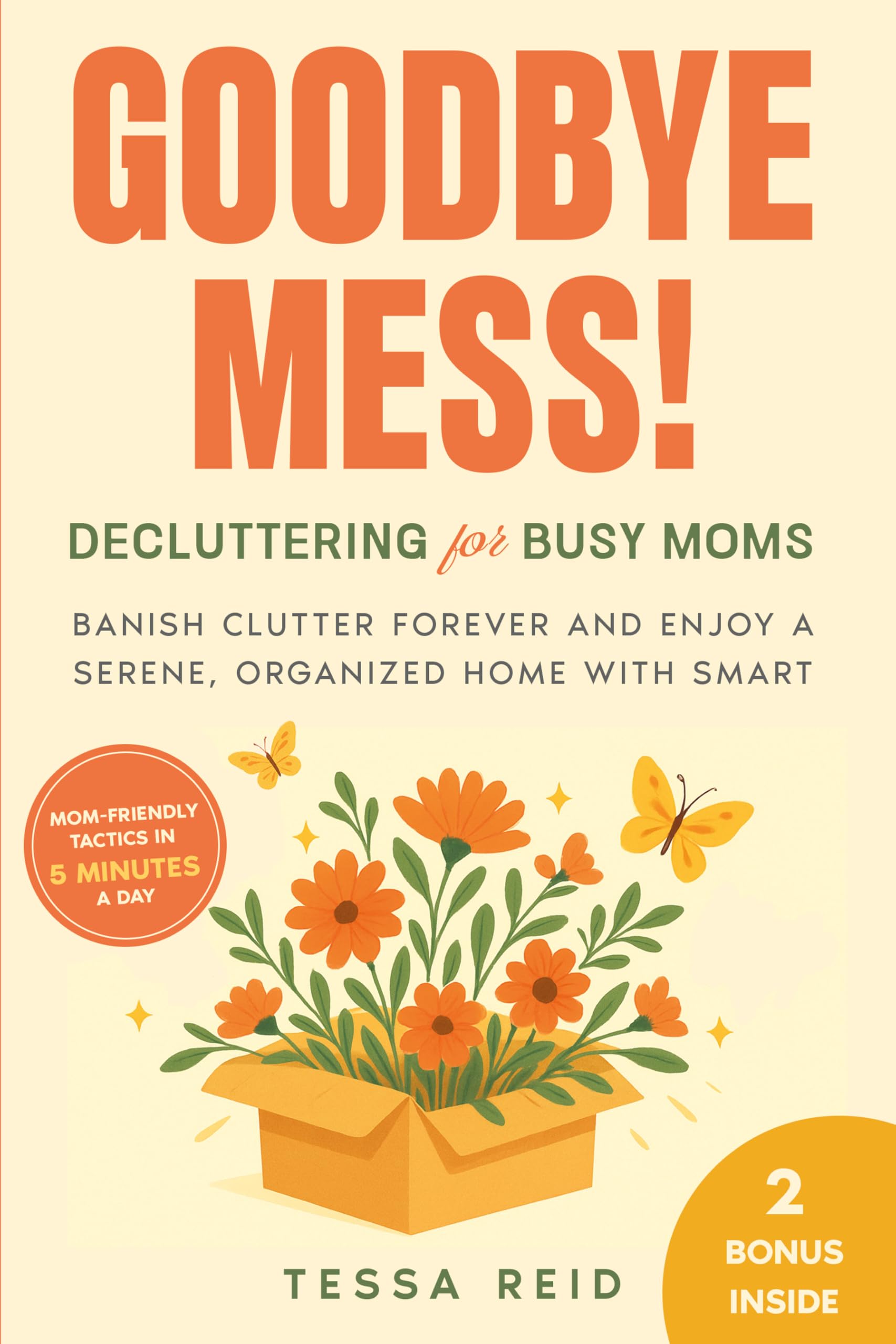


Goodbye Mess! Decluttering for Busy Moms: Banish Clutter Forever and Enjoy a Serene, Organized Home with Smart, Mom-Friendly Tactics in 5 Minutes a Day
- Crafts, Hobbies & Home
- Home Improvement & Design
- How-to & Home Improvements
5. Screen Time and Technology — A Workable Framework
The goal isn't eliminating screens; it's making technology intentional. The AAP's 2023 updated guidance moves away from hard hour-limits for children over two and toward quality, context, and co-viewing as the key variables.
AAP Benchmarks at a Glance
- Under 18 months: Video chat only (e.g., FaceTime with grandparents) - 18–24 months: High-quality programming only, with a caregiver watching alongside - 2–5 years: Up to one hour per day of high-quality content - 6 and older: Consistent limits on time and type; screens should not displace sleep, physical activity, or homework
Practical Rules That Stick
- No screens during meals — this one rule alone improves family conversation and reduces mindless consumption - Charge devices outside the bedroom — for children and teens alike - Family media plan — the AAP offers a free, customisable Family Media Plan at healthychildren.org that takes about 10 minutes to complete
6. Building Independence Across Every Stage
Independence isn't given all at once — it's scaffolded, one small skill at a time, from toddlerhood through adolescence. Developmental psychologist Lev Vygotsky's concept of the "zone of proximal development" tells us children learn best when a task is just slightly beyond what they can do alone, with a little support.
Self-Care Milestones
- Age 2–3: Washes hands, attempts to dress with help - Age 4–5: Fully dresses independently, brushes teeth (with supervision) - Age 6–8: Showers independently, packs own school bag - Age 9–12: Manages own alarm clock, prepares simple meals, tracks own homework - Age 13+: Manages personal finances (allowance/budget), navigates public transport, advocates for themselves at appointments
Decision-Making Practice
Offer bounded choices from toddlerhood: "Do you want the red cup or the blue cup?" scales into "Which two subjects do you want to tackle first?" for a 10-year-old, and "How do you plan to balance revision and your social life this weekend?" for a 16-year-old. The structure stays the same; the stakes grow.
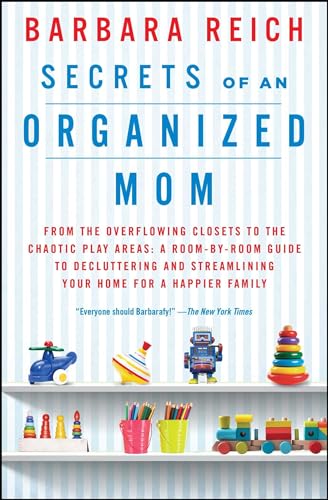
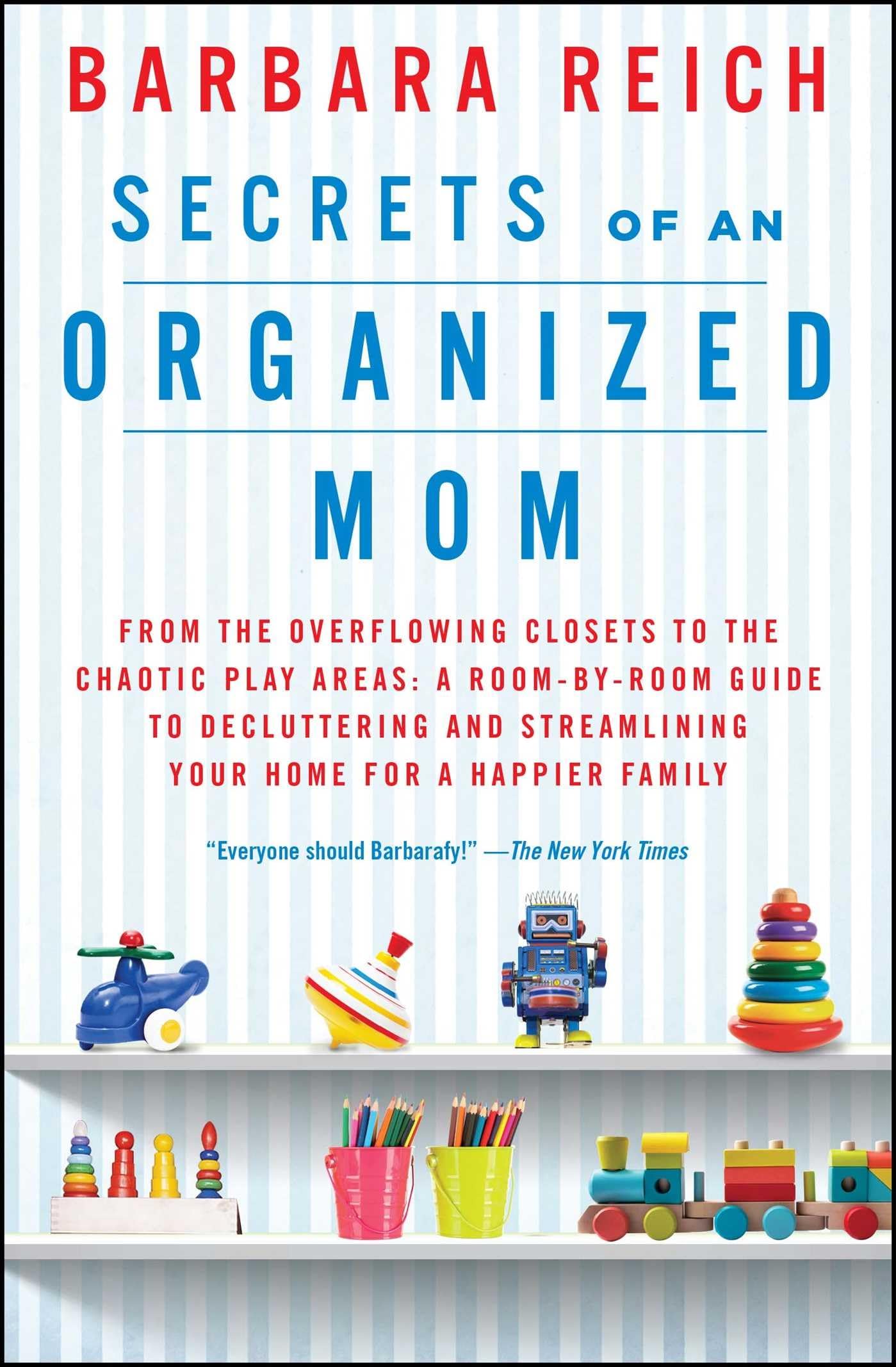


Secrets of an Organized Mom: From the Overflowing Closets to the Chaotic Play Areas: A Room-by-Room Guide to Decluttering and Streamlining Your Home for a Happier Family
- Crafts, Hobbies & Home
- Home Improvement & Design
- How-to & Home Improvements
7. Keeping the Home Organised Without Losing Your Mind
A tidy-enough home isn't about perfection — it's about reducing the cognitive load that cluttered environments place on everyone in the family. Research from the Princeton Neuroscience Institute found that physical clutter competes for your attention and reduces your ability to focus and process information.
Systems Over Willpower
Willpower runs out. Systems don't. The most effective family organisation tools share three features: they're visual, they're low-maintenance, and every family member can use them independently.
- One-in, one-out rule for toys and clothes — prevents accumulation at the source - Weekly 15-minute reset — every family member tidies their own zone before Sunday dinner - Labelled bins at child height — removes the excuse of not knowing where things go
For parents who find household management genuinely overwhelming — particularly those with ADHD or executive-function challenges — a structured planner can be transformative rather than just helpful.

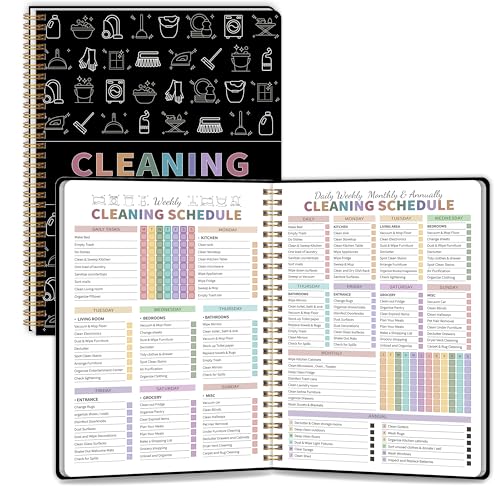
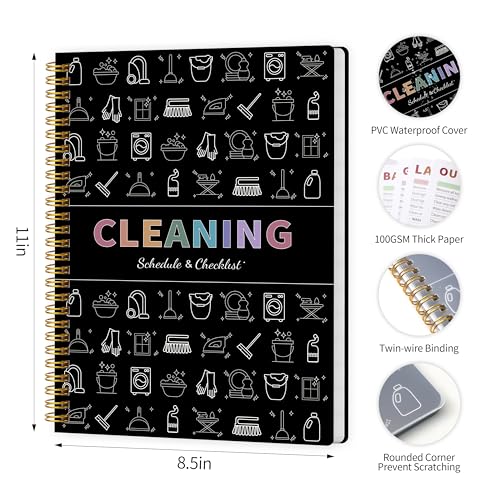
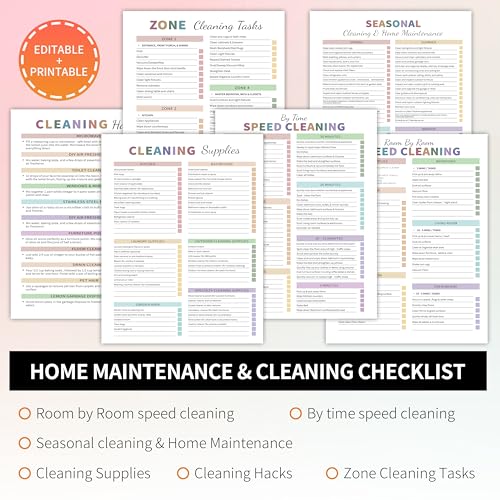
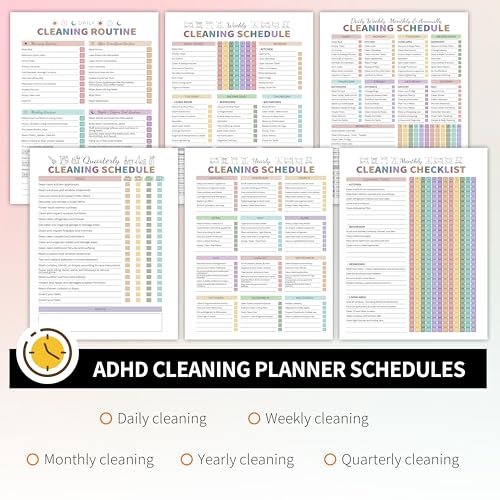
ADHD Cleaning Planner for Adults Women, Cleaning Schedule and Checklist Notebook, Cleaning and Organizing Planner, Daily Weekly Monthly Schedule Household Cleaning Checklist Planner
- 【Motivation Through Reward】Tailored for ADHD Cleaning Needs. Bright, colorful pages designed bring energy and
- 【Practical Layout】Undated Daily, Weekly, Monthly, Quarterly, and Yearly Cleaning Schedule Planner help you bre
- 【Durable】 Waterproof PVC cover design, prevents pages from water and oil sprinkle | Large size 8.5" X 11"| Pre
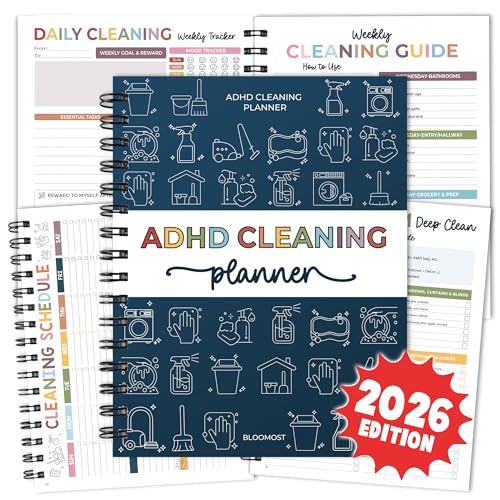
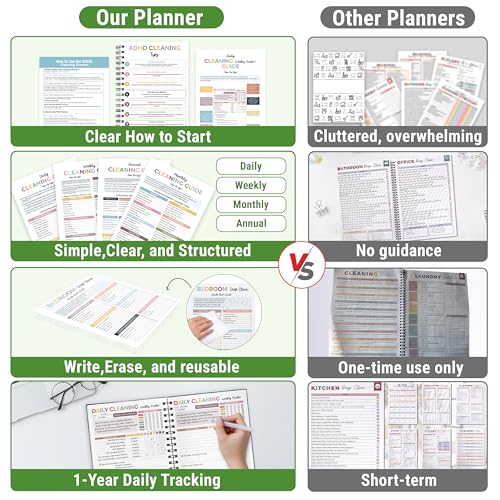
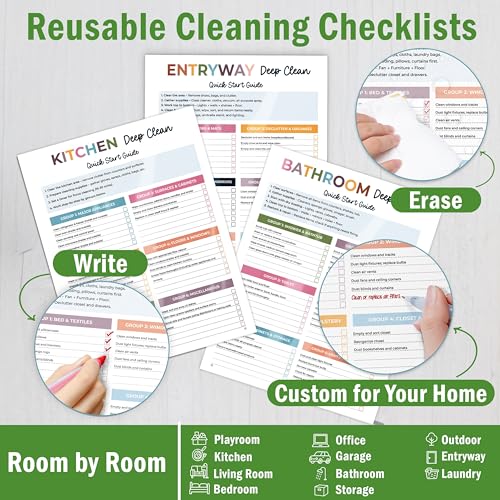

ADHD Cleaning Planner - Cleaning Schedule and Checklist Organizer for Adults and Teens - Daily, Weekly & Monthly Household Cleaning Checklist for ADHD Minds - Stress-Free Housework
- Perfect for ADHD – This planner is specifically designed to tackle the unique challenges of ADHD, with clear,
- Complete Cleaning Schedule – Includes daily, weekly, and monthly checklists for efficient cleaning management.
- Premium, Durable Pages – Includes easy-to-write, high-quality pages: glossy sections for tasks you want to wri
Parenting Hack Strategies at a Glance
| Strategy | Best Age Range | Primary Benefit | Main Challenge | Recommended Product | Approx. Cost |
|---|---|---|---|---|---|
| Visual morning schedule | 2–6 years | Reduces verbal reminders; builds autonomy | Needs initial setup time | M.O.M. Master Organizer of Mayhem | $13 |
| Weekly meal plan + batch cook | All ages | Cuts decision fatigue; saves money | Requires Sunday time block | Goodbye Mess! for Busy Moms | $Free–low |
| Age-appropriate chore chart | 3–17 years | Builds competence and responsibility | Consistency from parents | Secrets of an Organized Mom | $13 |
| Structured homework station | 6–17 years | Improves focus; reduces homework battles | Needs dedicated physical space | M.O.M. Master Organizer of Mayhem | $13 |
| ADHD-friendly cleaning planner | Adults + teens 13+ | Breaks tasks into dopamine-reward steps | Habit formation takes 4–6 weeks | GOLDPEI ADHD Cleaning Planner | $8 |
| Family media plan (AAP) | 2–17 years | Sets clear, agreed screen boundaries | Teens may resist initially | Bloomost ADHD Cleaning Planner | Free |
Expert Insights
Parenting doesn't come with a user manual, but it does come with a growing body of research that points in a consistent direction: small, reliable systems beat heroic daily effort. The families who seem to have it together aren't doing more — they've just built better rhythms. Start with one hack from this list this week. Nail it. Then add another. Within a month, your mornings, mealtimes, and evenings will feel measurably different.
The quotable truth? Structure isn't the opposite of warmth — it's what makes warmth sustainable.
If this guide helped you, save it for the next chaotic Monday morning, and share it with a parent friend who needs it more than they'll admit.
Sources & References
- American Psychological Association. "Stress in America 2023." APA.org, 2023. https://www.apa.org/news/press/releases/stress
- American Academy of Pediatrics. "Where We Stand: Screen Time." HealthyChildren.org, 2023. https://www.healthychildren.org/English/family-life/Media/Pages/Where-We-Stand-TV-Viewing-Time.aspx
- American Academy of Pediatrics. "Making Life Easier: Establishing Family Routines." HealthyChildren.org, 2022. https://www.healthychildren.org
- Rossmann, Marty. "Involving Children in Household Tasks: Is It Worth the Effort?" University of Minnesota College of Education and Human Development, 2002.
- Dweck, Carol S. Mindset: The New Psychology of Success. Random House, 2006.
- Satter, Ellyn. "Ellyn Satter's Division of Responsibility in Feeding." EllynSatterInstitute.org. https://www.ellynsatterinstitute.org
- McMains, Stephanie, and Sabine Kastner. "Interactions of Top-Down and Bottom-Up Mechanisms in Human Visual Cortex." Journal of Neuroscience, Princeton Neuroscience Institute, 2011.
- Vygotsky, Lev S. Mind in Society: The Development of Higher Psychological Processes. Harvard University Press, 1978.
- Academy of Nutrition and Dietetics. "Feeding Kids Right." EatRight.org, 2023. https://www.eatright.org
Frequently Asked Questions
How do I get my toddler to follow a morning routine without a meltdown?
What chores are realistic for a 5-year-old?
How many hours of screen time is too much for a school-age child?
My teenager refuses to do chores. What actually works?
Is batch cooking really worth the time investment?
How do I build a homework routine that my child actually sticks to?
How early should I start teaching my child independence skills?
Was this helpful?
Thanks — your feedback helps us pick what to write next.