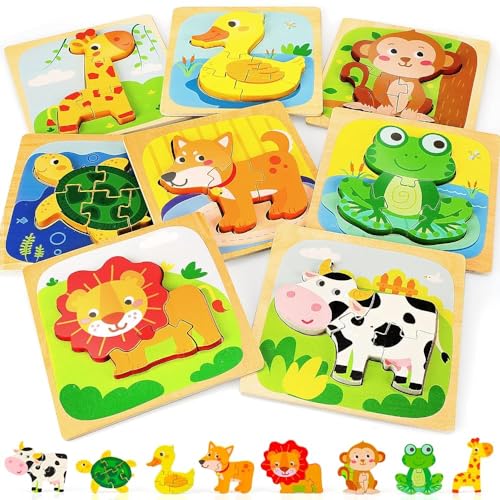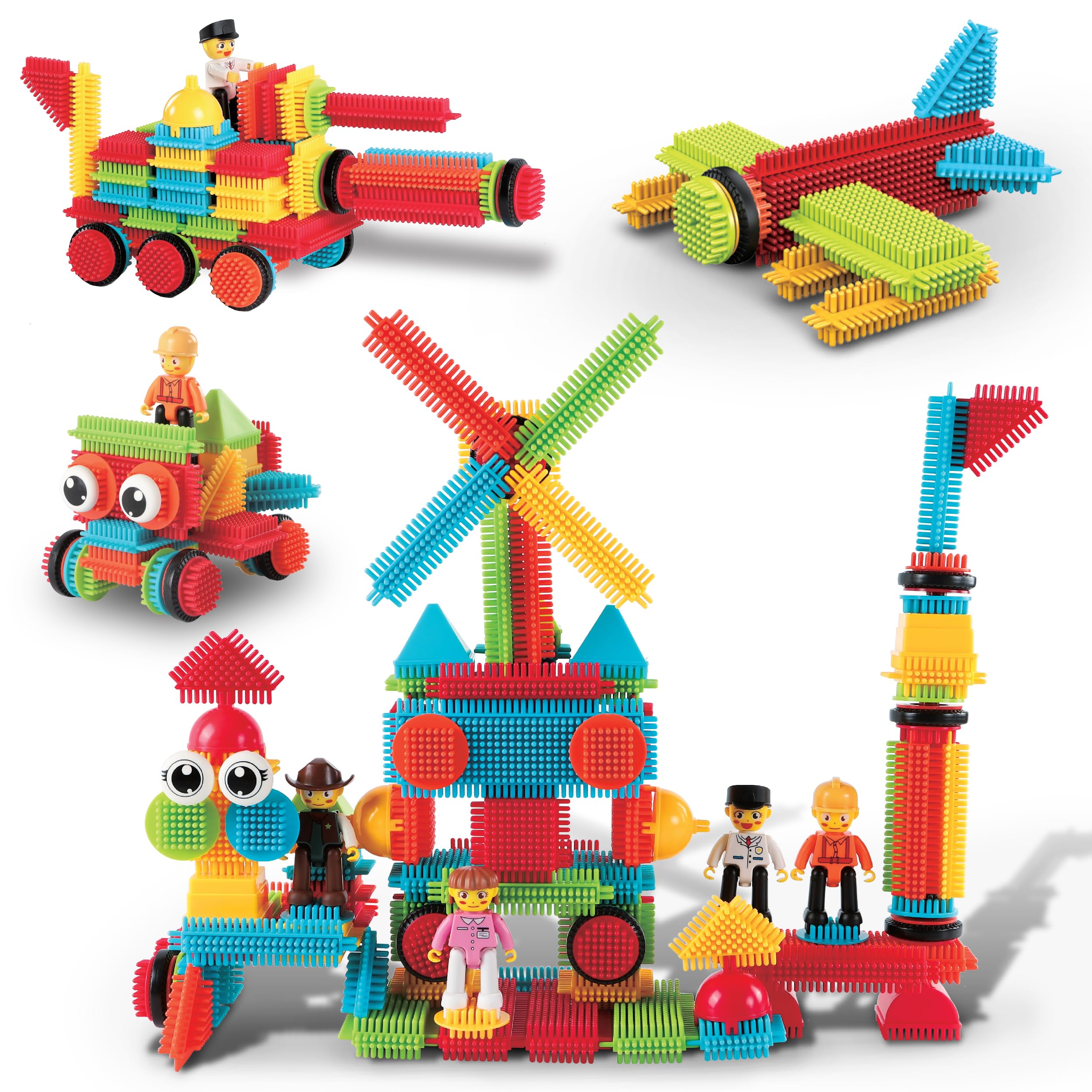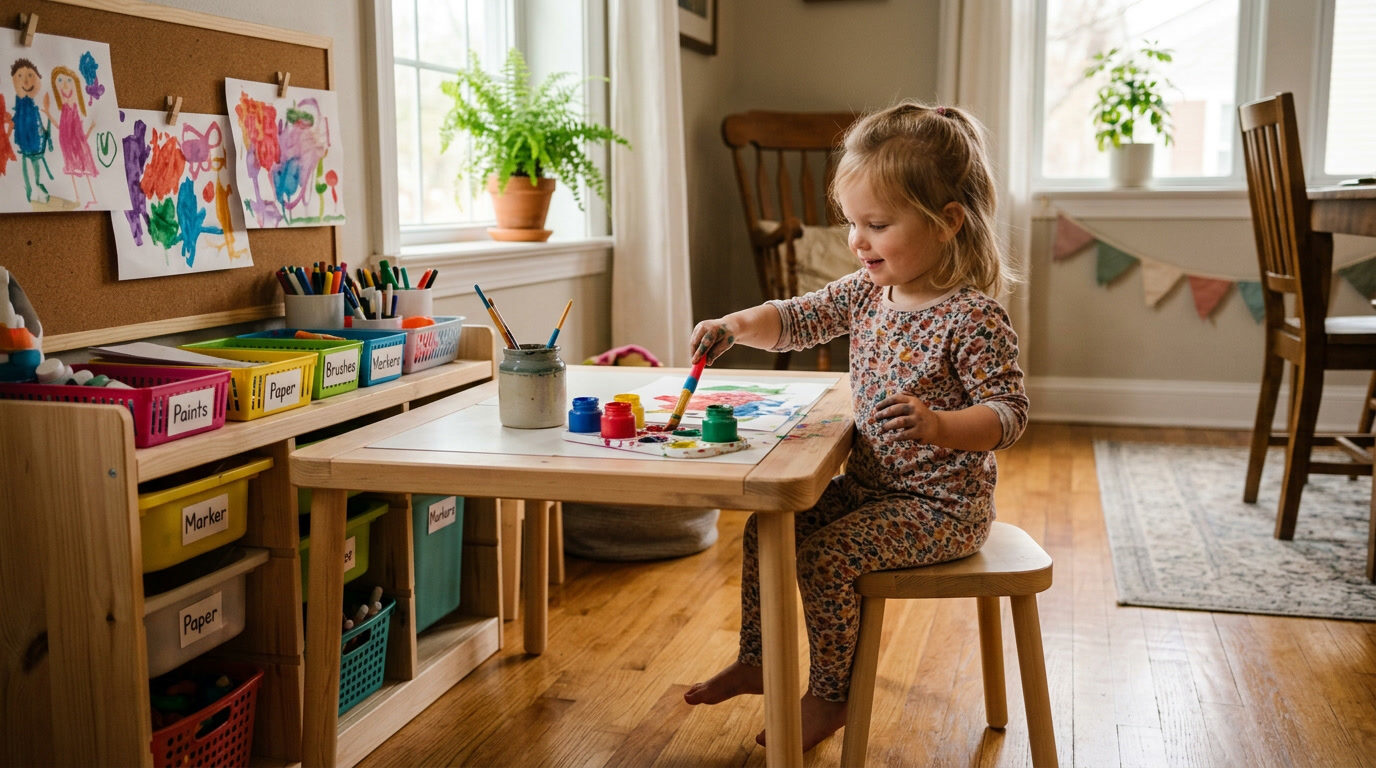
Sensory Bins: Let Their Hands Do the Thinking
Toddlers learn letters, numbers, colours, and shapes most effectively through hands-on, multi-sensory play — not rote repetition — so swapping flashcards for activities like sensory bins, storytime, crafts, and outdoor games gives their developing brains far richer input.

In this article
Picture this: you've bought the flashcard set, you've sat down with your 2-year-old, and within 90 seconds they've flipped the cards into a pile, declared "done," and wandered off to lick the window. Sound familiar?
Here's the thing — your toddler isn't being difficult. Their brain is simply wired for a different kind of learning. According to the American Academy of Pediatrics (AAP), children learn best in the first three years of life through play that is hands-on, social, and emotionally engaging. A 2018 AAP policy statement confirmed that play-based learning builds the executive function, language, and early numeracy skills that formal instruction targets — often more efficiently than drills.
In this guide you'll discover:
1. Sensory Bins: Let Their Hands Do the Thinking
Sensory bins are one of the highest-return learning investments you can make for a toddler, because they simultaneously build fine motor control, vocabulary, and early numeracy — while your child thinks they're just playing.
Fill a shallow storage container with coloured rice, kinetic sand, or dried lentils. Bury magnetic letters, small numbered tiles, or foam shapes inside. Give your toddler scoops, tongs, and measuring cups, then step back and let the excavation begin.
Why It Works
When a child physically handles a letter "B," turns it over, traces its bumps, and says its name, they are encoding that symbol through touch, sight, and sound at the same time. This multi-sensory encoding is exactly what neuroscientists mean when they talk about "embodied cognition" — the body helps the brain remember.

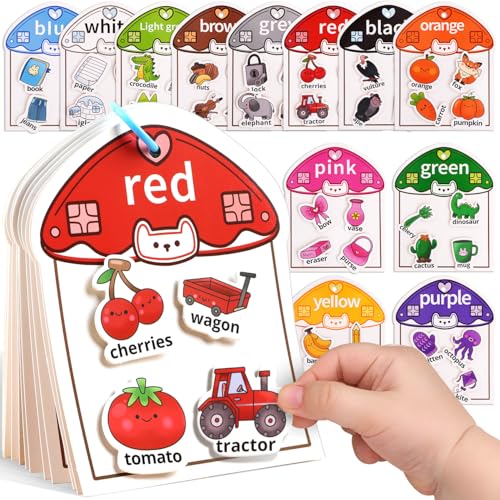
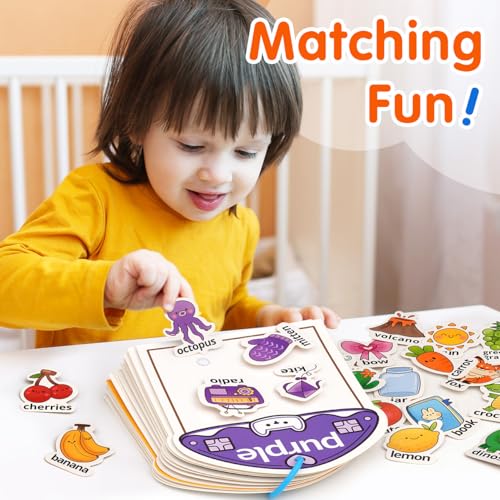
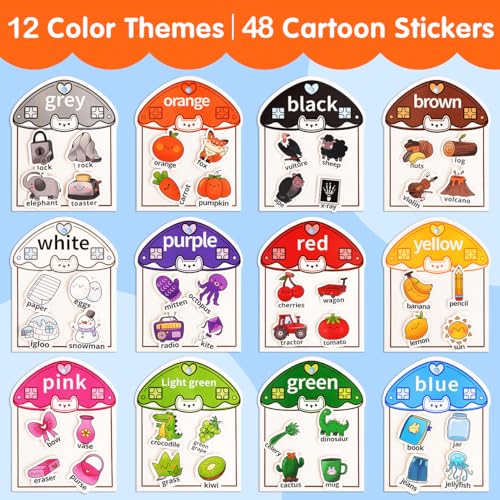
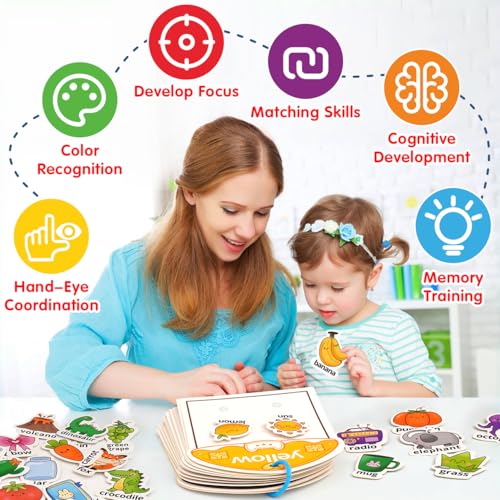
Montessori Busy Book Color Sorting Toys for Toddlers 2-4, Educational Preschool Learning Activities for Kids, Sensory Fine Motor Matching Games for 3 Year Old Boys Girls Gifts
- Matching Color Busy Book: Your toddlers will adore mastering 12 colors with our interactive busy book. They'll
- Build Essential Skills: Watch your child's mind grow! This engaging activity is far more than a sorting toys—i
- Spark Joyful Connections & Teamwork: "Wow, you found the red tomato! Great job, sweetie!" This busy book is de
2. Storytime That Talks Back
Reading aloud to toddlers is one of the most evidence-backed activities in early childhood development — but how you read matters as much as how often.
The single most important activity for building the knowledge required for eventual success in reading is reading aloud to children.
— Marilyn Jager Adams, cognitive scientist and author of *Beginning to Read* (1990)
Choose books that feature letters, numbers, shapes, or counting as part of the story — not just as lists. Titles where characters count objects, spell their names, or notice letters in the environment give you natural pause points to interact.
Making Storytime Interactive
Instead of reading straight through, try the "point and ask" method:
This back-and-forth — what researchers call "dialogic reading" — has been shown by the National Institute for Literacy to produce significantly larger gains in vocabulary and print awareness compared with passive listening.
Pair your storytime corner with visual reference tools your toddler can point to between sessions.


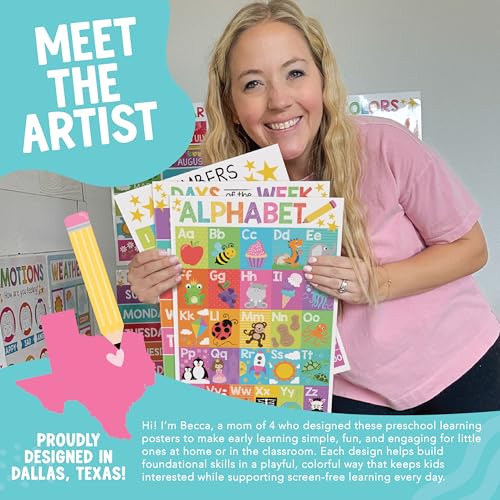
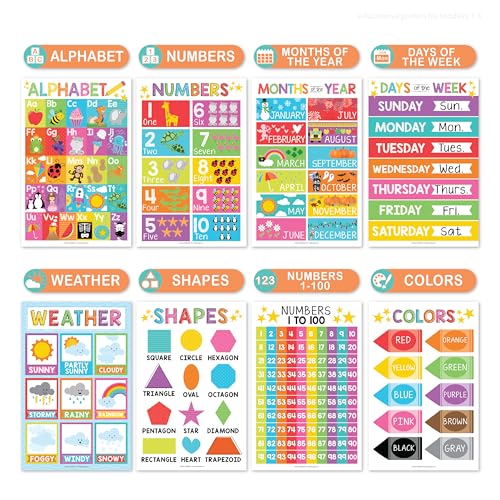
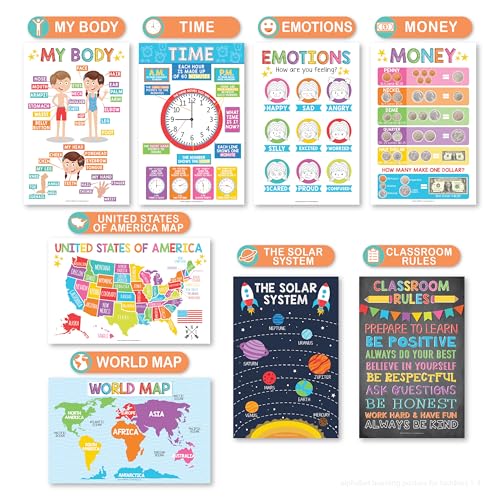
Hadley Designs 16 Educational Posters for Classroom Must Haves - Laminated Pre-K Posters for Toddler Homeschool Essentials, Toddler & Preschool Learning Activities, Kindergarten Classroom Decor
- BOOST PRESCHOOL LEARNING WITH EDUCATIONAL POSTERS & MORE: This set has 16 colorful theme laminated educational
- SCREEN-FREE LEARNING ACTIVITIES FOR TODDLERS: Looking for learning posters for toddlers 1-3? This set offers a
- IDEAL FOR KINDERGARTEN AND PRESCHOOL LEARNING ACTIVITIES: These classroom essentials are perfect for kindergar
3. DIY Crafts That Build Letters and Numbers With Their Hands
Crafting gives toddlers a concrete, physical relationship with abstract symbols — and the finished product on the fridge is a daily reinforcement tool.
You don't need Pinterest-perfect results. The learning happens in the making, not the displaying.
Simple Craft Ideas to Try This Week
Torn-paper letters: Draw a large letter outline on card stock. Your toddler tears coloured paper into small pieces and glues them inside. Tearing builds hand strength; filling the shape builds letter recognition.
Playdough numbers: Roll snakes of playdough and form them into numerals together. Say the number, count out that many small objects, then squash it and start again.
Collage counting books: Staple five sheets of paper together. Write one numeral per page (1–5). Your toddler cuts or tears pictures from old magazines and glues the right number of pictures on each page.
That last activity is a perfect moment to introduce safe cutting tools.



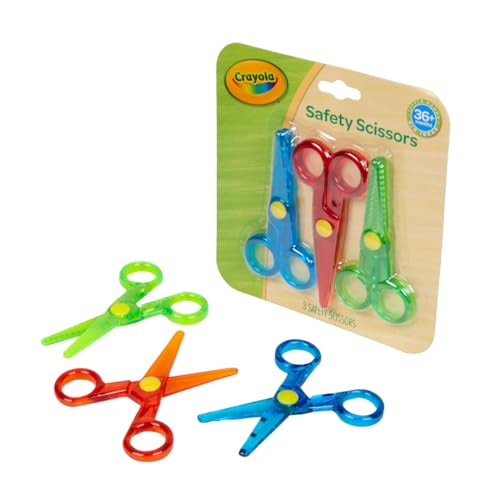
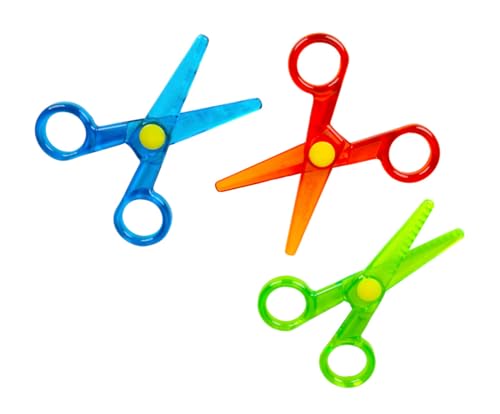
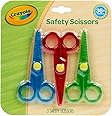
Crayola Toddler Safety Scissors (3pk), Blunt Tip Training Scissors for Preschool Learning Activities, Right & Left Handed, Toddler Arts & Crafts Essentials
- MY FIRST SCISSORS: This set includes 3 Crayola Safety Scissors designed for “ouch-free” paper cutting, ensurin
- 3 CUTTING STYLES: Featuring straight, wavy, and zigzag blades, these scissors are perfect for a wide range of
- SAFE FOR PRESCHOOLERS: With plastic blades and rounded tips, these scissors are ideal for classroom crafting,
For toddlers who are ready for more structured cutting practice, a dedicated activity book bridges free play and pre-school readiness beautifully.

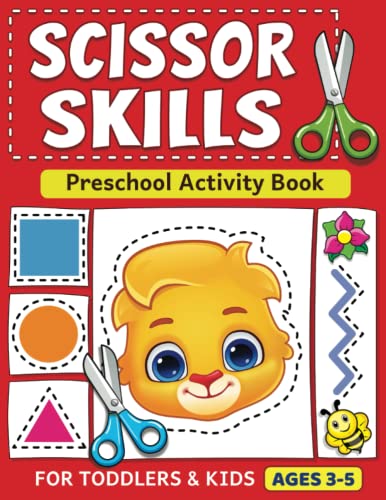


Scissor Skills Preschool Activity Book: Learn to Cut Lines, Shapes, Fruits, Animals | Fun Cutting & Coloring Book for Kids | Preschool Learning Activities for 3-5 Year Olds
- Children's Books
- Activities, Crafts & Games
- Activity Books
4. Everyday Routines as a Hidden Curriculum
The most underused classroom in your home is your daily routine — and it costs nothing to unlock.
Toddlers between 18 months and 3 years are in a sensitive period for language and number sense. Narrating and quantifying the ordinary tasks you're already doing plants seeds that formal instruction will later water.
Routine Moments Worth Mining
Mealtimes - Count out blueberries as you place them on the plate: "One, two, three — three blueberries for you." - Name colours: "Your cup is blue. Can you find something else that's blue?" - Introduce simple fractions naturally: "I'm cutting your toast in half — now there are two pieces."
Bath time - Count rubber ducks, pour water and count cups, identify letters on bath foam sets. - "Let's wash your left arm, now your right arm" — body awareness + vocabulary.
Grocery shopping - Hand your toddler two items to hold: "Can you hold the two yogurts?" - Point to signs and say the first letter: "That sign says S-A-L-E. What sound does S make?"
5. Puzzles and Matching Games: The Quiet Powerhouses
Wooden puzzles and matching games are classics for a reason — they develop spatial reasoning, problem-solving, and symbol recognition all at once.
When a toddler picks up a puzzle piece shaped like the letter "A," rotates it, tries it in the wrong slot, corrects, and succeeds, they are practising the exact cognitive loop — hypothesis, test, feedback, adjust — that underlies all future academic learning.
Choosing the Right Puzzle for Your Toddler's Stage
| Age | Puzzle Type | What It Builds | |---|---|---| | 12–18 months | 2–4 large knob pieces | Basic shape recognition, grip | | 18–24 months | 4–8 piece chunky puzzles | Spatial reasoning, persistence | | 2–3 years | Alphabet/number peg boards | Letter and numeral recognition | | 3+ years | Interlocking 12–24 pieces | Sequential thinking, fine motor |
For the 2–3 year range, a well-designed wooden alphabet and number puzzle is one of the best single purchases you can make.
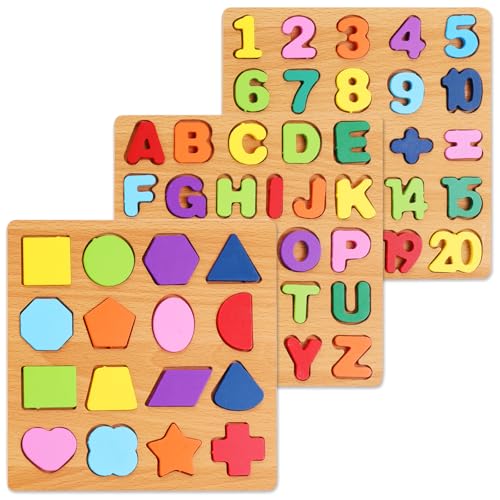
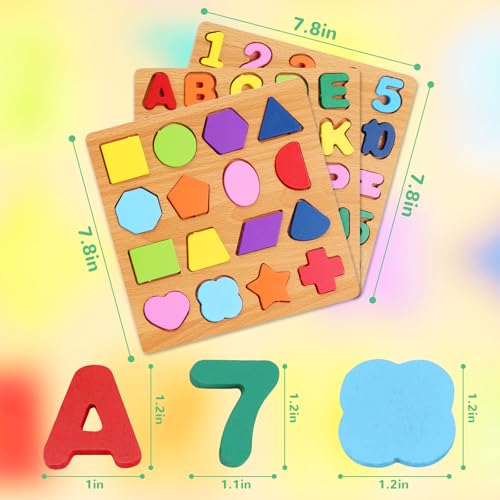
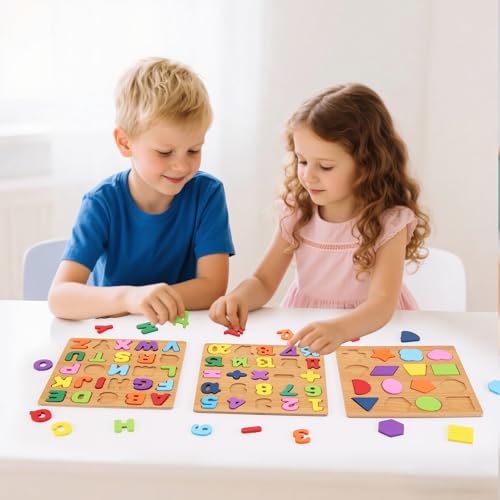
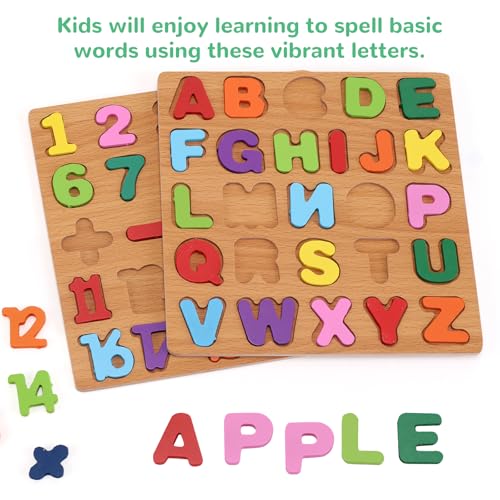
Alphabet Wooden Puzzles for Toddlers 3-5, Pack of 3 ABC, Number and Shape Puzzle, Preschool Educational Learning Toys with Puzzle Board & Letter Blocks for Girls Boys Ages 3 4 5 Years Old
- Make Learning Fun: Who says learning can’t be fun hasn’t tried the Nashrio wooden alphabet puzzle! Our puzzle
- Alphabet and Number Puzzle: The matching letter game for kids includes both the alphabet letters and numbers f
- Wooden Design for Safe Playing: Our number and alphabet matching game is crafted with high-quality wood and sa
For toddlers who are ready for multi-theme learning across letters, numbers, shapes, colours, and more, a comprehensive busy workbook extends the puzzle concept into a portable format.
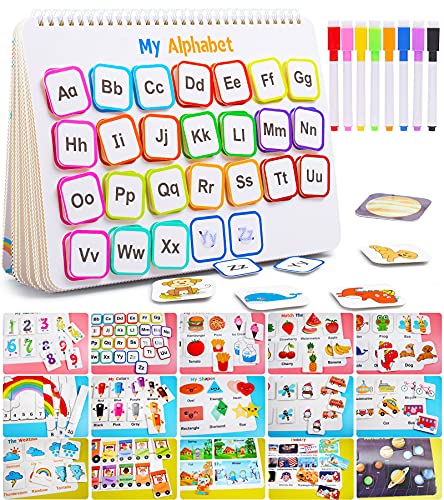


Huijing Montessori Preschool Learning Activities Busy Book - Workbook Activity Binder / Toys for Toddlers, Autism Learning Materials and Tracing Coloring Book
- 【LEARNING WHILE PLAYING】 This is a book helping toddlers to learning while playing.Parents can participate in
- 【15 THEMES AND 14 DRAWING&WRITING PAGES】 This Busy Book covers 15 themes, including numbers, alphabet, Food &
- 【DIVERSE LEARNING EXPERIENCE】 This preschool educational toy is multi-functional, allowing child to develop fi
6. Outdoor Scavenger Hunts: Learning That Moves
Toddlers are not designed to sit still, and outdoor learning leverages that biology rather than fighting it. A letter or number scavenger hunt turns a walk around the block into a full cognitive workout.
Children who engage in active outdoor play show improved attention, working memory, and cognitive flexibility compared to sedentary peers.
— Hillman et al., *Preventive Medicine* (2008)
How to Run a Toddler Scavenger Hunt
Letter version: Before you leave the house, pick three letters. Write them large on a card. As you walk, look for those letters on signs, letterboxes, shop fronts, and vehicle number plates. When your toddler spots one, they get to put a sticker on the card.
Number version: Pick numbers 1–5. Count objects you find: one dog, two red cars, three birds on a wire.
Colour and shape version: "Find something round. Find something yellow. Find something bigger than your hand."
7. High-Quality Video Content — Used Intentionally
Screen time for toddlers is a topic that generates a lot of heat and not always a lot of light. The evidence is more nuanced than "screens bad."
The AAP's current guidance (updated 2023) recommends that for children 18–24 months, video content should be high-quality and watched with a caregiver who helps the child connect what they see to the real world. For ages 2–5, up to one hour per day of high-quality programming is considered acceptable.
The key word in both cases is with. Passive solo viewing produces minimal learning in toddlers; co-viewing with a responsive adult who comments, asks questions, and links content to real life produces measurable gains.
What "High-Quality" Actually Means
8. Letter and Number Gardens: Growing Knowledge Outdoors
If you have any outdoor space — even a balcony with a few pots — a simple "learning garden" adds a sensory, seasonal dimension to early literacy and numeracy.
The concept is straightforward: use garden activities to embed counting, measurement, and even letter recognition into a context that feels magical to a toddler.
Ideas to Plant This Season
Counting seeds: Before planting, count seeds into a small cup together. "We're planting five sunflower seeds. Let's count them — one, two, three, four, five."
Letter-shaped planters: Arrange small pots in the shape of your child's initial. Water them together and watch "their letter" grow.
Measurement sticks: Push a craft stick next to a seedling. Mark its height weekly with a pencil. "It grew! It's taller than last week." Early measurement language is foundational for maths.
Colour sorting harvest: If you grow anything edible — cherry tomatoes, herbs, flowers — sort the harvest by colour before using it.
Comparing 6 Toddler Learning Approaches at a Glance
| Learning Activity | Best Age | Primary Skills Built | Prep Required | Recommended Product | Approx. Cost |
|---|---|---|---|---|---|
| Sensory bins | 18 months–3 yr | Fine motor, letter/number recognition, sensory processing | Medium (set-up) | MUONE Montessori Busy Book | $8–15 |
| Storytime + dialogic reading | 12 months–3 yr | Vocabulary, print awareness, listening | Low | Hadley Designs Educational Posters | $0 (library) |
| DIY crafts (cutting, collage) | 2–3 yr | Fine motor, creativity, numeral/letter formation | Medium | Crayola Toddler Safety Scissors | $5–10 |
| Wooden puzzles & matching | 18 months–3 yr | Spatial reasoning, symbol recognition, persistence | Low | NASHRIO Alphabet Wooden Puzzles | $12–20 |
| Outdoor scavenger hunts | 2–3 yr | Observation, attention, active vocabulary | Low | Hadley Designs Letter Posters | $0 |
| Co-viewed educational video | 18 months–3 yr | Vocabulary, phonics, number concepts | Low | Huijing Montessori Busy Book | $0–subscription |
Expert Insights
Your toddler's brain is not a vessel waiting to be filled — it's a fire waiting to be lit. The eight ideas in this guide work because they meet your child where they actually are: curious, physical, social, and driven by joy rather than obligation. You don't need a perfect setup, expensive materials, or hours of structured time. You need a sensory bin on a Tuesday afternoon, a question at the dinner table, a walk where you hunt for the letter S together.
The best classroom your toddler will ever have is the one you're already standing in.
If this guide was useful, save it, share it with another parent, or bookmark it for the next rainy afternoon when you need a fresh idea. And if you'd like more research-backed, jargon-free guidance on raising curious, confident kids, subscribe to the tinymindsworld.com newsletter — new guides every week.
Sources & References
- American Academy of Pediatrics. "The Power of Play: A Pediatric Role in Enhancing Development in Young Children." Pediatrics, 2018. https://publications.aap.org/pediatrics/article/142/3/e20182058/38649
- American Academy of Pediatrics. "Media and Young Minds." Pediatrics, updated guidance 2023. https://www.aap.org/en/patient-care/media-and-children/
- Levine, S.C., Suriyakham, L.W., Rowe, M.L., Huttenlocher, J., & Gunderson, E.A. "What Counts in the Development of Young Children's Number Knowledge?" Developmental Psychology, 46(5), 1309–1319. 2010.
- Linebarger, D.L., & Walker, D. "Infants' and Toddlers' Television Viewing and Language Outcomes." American Behavioral Scientist, 48(5), 624–645. 2005.
- Hillman, C.H., Erickson, K.I., & Kramer, A.F. "Be Smart, Exercise Your Heart: Exercise Effects on Brain and Cognition." Nature Reviews Neuroscience, 9(1), 58–65. 2008.
- Adams, M.J. Beginning to Read: Thinking and Learning About Print. MIT Press. 1990.
- Suskind, D. Thirty Million Words: Building a Child's Brain. Dutton. 2015.
- National Institute for Literacy / National Early Literacy Panel. "Developing Early Literacy: Report of the National Early Literacy Panel." 2008. https://lincs.ed.gov/publications/pdf/NELPReport09.pdf
Frequently Asked Questions
At what age should I start teaching my toddler letters and numbers?
How long should a learning activity last for a toddler?
Is it okay to use educational apps with my toddler?
My toddler isn't interested in letters or numbers at all — should I be worried?
What's the difference between Montessori-style learning and standard play-based learning?
Can outdoor activities really teach letters and numbers, or is that a stretch?
How do I keep my toddler engaged when they lose interest quickly?
Was this helpful?
Thanks — your feedback helps us pick what to write next.