
The Hidden Mental Health Cost of Dad Isolation
Dads need supportive parenting friendships just as much as moms — and the research shows that social isolation hits fathers hard, affecting their mental health, their parenting quality, and even their children's development.
In this article
Picture this: two moms at a playground, laughing over cold coffee about the 3 a.m. wake-ups. A few benches away, a dad scrolls his phone alone, nodding politely when another parent walks past. This scene plays out everywhere — and it quietly costs men more than we realise.
According to the Survey Center on American Life (2021), the share of men with no close friends has jumped from 3% in 1990 to 15% today. For dads, that loneliness doesn't stay in the background — it shows up in higher rates of paternal depression, lower parenting confidence, and more conflict at home.
This guide is for every dad (and every mom who wants to understand what her partner is navigating). By the end, you'll understand:
1. The Hidden Mental Health Cost of Dad Isolation
Paternal mental health is under-discussed, under-diagnosed, and directly linked to social disconnection. The CDC estimates that roughly 1 in 10 fathers experience postpartum depression — a figure most people find surprising, because we rarely talk about it. What drives that number? Isolation is near the top of the list.
When men become fathers, many of their pre-child friendships quietly fade. Schedules change, priorities shift, and the cultural script that says men should be stoic providers doesn't exactly encourage reaching out for a chat about anxiety or overwhelm.
What the data actually shows
Research published in the Journal of Family Psychology has consistently found that fathers with stronger social support networks report lower levels of parenting stress and higher parenting self-efficacy — meaning they feel more capable and confident in the role. Conversely, socially isolated fathers show higher rates of harsh parenting and disengagement.



Dad Is Tired (but he laughs anyway): Real-Life Parenting Support for Dads Navigating Exhaustion, Chaos, and Everyday Family Life (Everyday Parenting)
- Kindle Store
- Kindle eBooks
- Parenting & Relationships
2. How Dad Friendships Change Across Your Child's Life Stages
The kind of support you need from other dads shifts dramatically as your child grows. Here's what that looks like across the full 0–17 arc.
Newborn to 12 months: Survival mode solidarity
New dads are sleep-deprived, often sidelined by systems that centre mum, and quietly terrified. Other new dads are the only people who fully get it. Connecting with fathers at this stage — through hospital dad groups, NCT (UK) or Childbirth Connection (US) peer groups, or simply a neighbour with a similarly aged baby — provides immediate, practical relief.
Toddler years (1–3): Discipline solidarity
This is when parenting philosophies start to diverge and dads often feel judged. Knowing a few other dads navigating the same boundary-setting chaos makes you braver and more consistent.
School age (4–11): The activity years
Football sidelines, school gate pickups, and birthday parties become natural meeting points. Dad friendships forged here tend to be the most durable — built around shared routines and proximity.
Tweens and teens (12–17): The long game
Parenting a teenager is lonely in a different way — the challenges feel more private and the stakes feel higher. Dads who have maintained friendships through the earlier years have a ready-made support system when the hard conversations start.


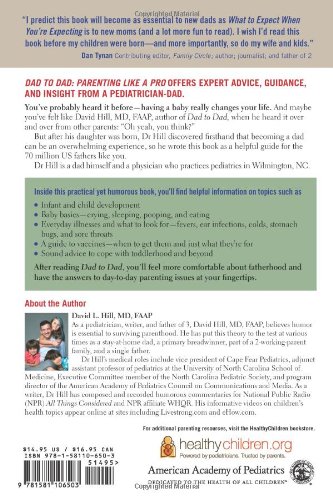

Dad to Dad: Parenting Like a Pro
- Parenting & Relationships
- Family Relationships
- Fatherhood
3. What Children Learn When They Watch Dad Make Friends
Children are social apprentices. They learn how relationships work not from what you tell them, but from what they watch you do — and research backs this up strongly.
A landmark body of work by Dr. Ross Parke, Professor Emeritus of Psychology at the University of California, Riverside, demonstrated that fathers play a distinctive role in children's peer socialisation. His research found that the quality of a father's own friendships and social engagement was positively associated with children's social competence and peer acceptance.
What your kids are actually absorbing
4. Breaking the "Stoic Dad" Script — Why Men Pull Back From Friendship
The drop in male friendship over the past 30 years isn't accidental. It's driven by cultural norms that actively discourage men from the vulnerability that deep friendship requires.
The American Psychological Association's 2019 guidelines on psychological practice with men and boys identified "restrictive emotionality" — the expectation that men suppress emotional expression — as a significant risk factor for poor mental and physical health outcomes.
For dads specifically, this plays out in a few predictable patterns:
The three most common friendship blockers for dads
1. The "I'm fine" reflex. Men are socialised to project competence. Admitting that parenting is hard, or that you're lonely, feels like failure. So they don't say it — and friendships stay surface-level.
2. Activity dependency. Many male friendships are built around doing (sport, gaming, work) rather than talking. When the activity disappears after kids arrive, so does the friendship infrastructure.
3. Time guilt. Dads who are already stretched between work and family often feel they don't deserve to spend time on friendships. This is a false economy — research consistently shows that socially connected fathers are more present and patient at home.




The Daily Dad: 366 Meditations on Parenting, Love, and Raising Great Kids
- Relationships
- Interpersonal Relations
- Image Unavailable Image not available forColor:
5. Practical Playbook: How to Build Dad Friendships That Actually Last
Building adult friendships feels awkward — that's normal, and it's worth naming. Here's a practical, stage-by-stage approach.
Find your entry points
- Dad-specific groups: Many hospitals, children's centres, and community organisations run dad groups. In the UK, the charity Fathers Network Scotland and Home-Start both facilitate peer support for fathers. In the US, the National Fatherhood Initiative maintains a directory of local programmes. - Your child's activities: Football, swimming, Scouts, music lessons — every activity your child attends is a room full of parents. You just need to show up slightly more intentionally. - Workplace parents: Colleagues with kids are a chronically underused resource. A shared commute or a lunch break can become a genuine support relationship. - Online communities: Subreddits like r/daddit and Facebook groups for local dads have become surprisingly substantive spaces for peer support — especially useful for dads in rural areas or with non-standard schedules.
Deepen the connection

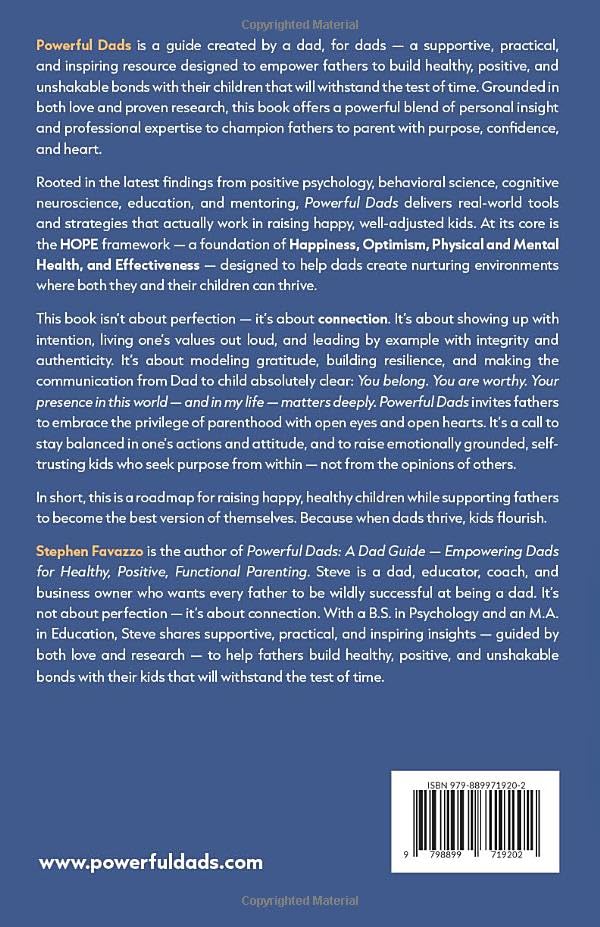


Powerful Dads: Empowering Dads for Healthy, Positive, Functional Parenting
- Parenting & Relationships
- Parenting Boys
- Image Unavailable Image not available forColor:
6. When Dad Needs More Than Friends: Recognising the Signs
Friendship is powerful — but it isn't a substitute for professional support when something more serious is going on. Knowing the difference matters.
Signs that a dad may need more than peer support
The American Academy of Pediatrics (AAP) recommends that paediatricians screen for paternal depression at well-child visits — a policy introduced precisely because dads often don't seek help independently. If you recognise these signs in yourself or a dad you know, the first step is a conversation with a GP or primary care physician.




Tuesday Mornings with the Dads
- Death & Grief
- Grief & Bereavement
- Image Unavailable Image not available forColor:
Comparing Dad Support Resources: Which Approach Fits Your Stage?
| Support Type | Best For | Key Benefits | Main Drawbacks | Recommended Resource | Approx. Cost |
|---|---|---|---|---|---|
| Local dad group | Newborn–toddler stage | Face-to-face connection, structured meeting time | Requires consistent schedule | Powerful Dads | Free–low cost |
| Parenting book / daily reflection | Any stage, solo practice | Low barrier, fits into existing routine | One-directional, no peer interaction | The Daily Dad | ~$15–20 |
| Online community (r/daddit etc.) | Dads with limited local options | 24/7 access, anonymity, diverse perspectives | Can lack depth; screen-based | Dad Is Tired | Free |
| Structured parenting programme | School-age, teens | Evidence-based content, cohort of peers | Time commitment, may feel formal | Dad to Dad | $15–45 |
| Peer memoir / narrative nonfiction | Processing grief or major transition | Emotional validation, normalises struggle | Passive rather than interactive | Tuesday Mornings with the Dads | ~$44 |
| Faith-based dad community | Dads with religious framework | Values alignment, built-in community | Not universally applicable | The Intentional Father | ~$13 |
Expert Insights on Fatherhood and Social Connection
Here's the truth that doesn't get said enough: being a good dad doesn't mean doing it alone. The fathers who show up most consistently for their children are almost always the ones who have someone showing up for them. That might be a mate from the football sideline, a dad group at the children's centre, or just one honest conversation with a colleague who gets it.
The bravest thing a dad can do isn't to need no one. It's to reach out anyway.
If this article resonated with you, save it, share it with a dad in your life who needs it, or leave it somewhere a new father might find it. Small gestures, big ripple effects.
Sources & References
- Survey Center on American Life. "The State of American Friendship: Change, Challenges, and Loss." 2021. https://www.americansurveycenter.org/research/the-state-of-american-friendship-change-challenges-and-loss/
- Centers for Disease Control and Prevention (CDC). "Depression Among Women and Men." https://www.cdc.gov/reproductivehealth/depression/index.htm
- American Academy of Pediatrics (AAP). "Fathers' Roles in the Care and Development of Their Children: The Role of Pediatricians." Yogman M, Garfield CF, Committee on Psychosocial Aspects of Child and Family Health. Pediatrics. 2016;138(1). https://doi.org/10.1542/peds.2016-1128
- American Psychological Association. "APA Guidelines for Psychological Practice with Boys and Men." 2018. https://www.apa.org/about/policy/boys-men-practice-guidelines.pdf
- Parke, R.D. "Fathers and Families." In M.H. Bornstein (Ed.), Handbook of Parenting, Vol. 3. Lawrence Erlbaum Associates, 2002.
- Way, N. Deep Secrets: Boys' Friendships and the Crisis of Connection. Harvard University Press, 2011.
- Goodman, J.H. "Paternal Postpartum Depression, Its Relationship to Maternal Postpartum Depression, and Implications for Family Health." Journal of Advanced Nursing. 2004;45(1):26–35.
- Fathers Network Scotland. Resources and support for fathers. https://www.fathersnetwork.org.uk
- National Fatherhood Initiative. Programme finder and resources. https://www.fatherhood.org
Frequently Asked Questions
Why do dads struggle to make friends more than moms?
How do I find dad groups near me?
Is it normal to feel lonely as a dad?
How can I support my partner in building dad friendships?
What if my child is a teenager — is it too late to build dad friendships?
Can dad friendships actually improve my child's outcomes?
Do online dad communities count as real support?
Was this helpful?
Thanks — your feedback helps us pick what to write next.